
Dealing with a vehicle breakdown is frustrating and poses significant safety risks to you and other drivers. Whether you are on a highway or in a driveway, moving a disabled car quickly and correctly is essential to prevent accidents and further damage to the vehicle.
Assessing the Situation
Before you even think about putting your hands on the bumper, you need to pause and assess the environment. Adrenaline might be telling you to push immediately, but rushing is where accidents happen.
Safety Precautions
Your primary concern is visibility and traffic flow. If you are on a public road, turn on your hazard lights immediately. If it is safe to exit the vehicle, place warning triangles or road flares at least 100 feet behind your car to alert approaching drivers.
Never attempt to push a vehicle on a highway or high speed road. The speed differential between moving traffic and pedestrians is deadly. In these high risk scenarios, stay inside the vehicle with your seatbelt on until emergency services arrive, or if you can safely get completely off the road and behind a barrier, do so.
If you are in a lower risk environment like a parking lot or driveway, ensure the ground is level. Pushing a car on an incline is incredibly dangerous; gravity can easily overpower human strength, leading to a runaway vehicle.
Essential Equipment
You don’t need a professional mechanic’s garage, but a few basics help immensely:
- A friend (or two): You cannot steer and push at the same time safely. You need at least one person in the driver’s seat to control the brakes and steering, and one or two people to provide the muscle.
- Sturdy footwear: Flip flops or heels are a recipe for a twisted ankle. You need grip to generate force.
- Gloves: Metal surfaces can be hot, cold, or sharp.
- Tow strap (optional but helpful): If you are using another vehicle to assist, a proper tow strap (not a chain or rope) prevents damage.
Moving a Vehicle That Can Roll
If the tires are inflated, the wheels aren’t locked due to collision damage, and the transmission can be shifted into neutral, rolling the vehicle is usually the most straightforward method.
1. Coordinate Communication
Establish clear hand signals or verbal commands between the person steering and the people pushing. The driver has the most critical job: stopping the car. Ensure the driver knows to keep their foot hovering near the brake pedal at all times.
2. Prepare the Vehicle
- Unlock the steering wheel: Insert the key and turn it to the “Accessory” or “On” position. This unlocks the steering column so the driver can maneuver. Do not start the engine.
- Shift to Neutral: For automatic transmissions, shift to ‘N’. For manual transmissions, depress the clutch and shift the stick to the neutral position.
- Release the parking brake: Do this only when everyone is ready to push.
3. The Push
Pushers should place their hands on the sturdy parts of the rear of the vehicle, such as the trunk lid frame or the pillars. Avoid pushing on the taillights, rear glass, or plastic bumper covers, which can crack under pressure.
Drive with your legs, not your back. Lean into the car and use your body weight. The initial movement requires the most force; once the vehicle has momentum, it requires less effort to keep moving.
4. Steering and Braking
The driver should steer carefully. Remember, with the engine off, power steering and power brakes will not function. The steering wheel will feel incredibly heavy, and the brake pedal will feel stiff and require much more pressure to stop the car.
Moving a Vehicle That Needs to Be Lifted
Sometimes, rolling isn’t an option. Maybe a wheel is damaged, the suspension has collapsed, or the car is stuck in ‘Park’ due to a dead battery and electronic shift lock. In these cases, dragging the car will ruin the tires and potentially the transmission. You need to reduce friction.
Using Wheel Dollies
Professional tow operators use “GoJaks” or wheel dollies, but you can rent or buy basic versions from auto parts stores.
- Jack up the vehicle: Use the car’s emergency jack to lift the affected wheel off the ground.
- Slide the dolly under: Position the dolly underneath the tire.
- Lower the vehicle: Lower the car so the weight rests on the dolly casters rather than the rubber tire.
- Repeat: Do this for all locked or damaged wheels.
Once on dollies, the car can be pushed in any direction, even sideways, which is helpful for maneuvering into tight garage spaces.
Tire Skates
If you don’t have dollies and need to slide a car a very short distance (like onto a tow truck bed), tire skates—plastic sleds that fit under the tire—can reduce friction. In a pinch, some people use sturdy pieces of plywood or even fast food trays under locked tires to slide a car across a smooth garage floor, though this is not recommended for rough surfaces or long distances.
When to Call a Professional
There is a fine line between being resourceful and being reckless. While moving a car across a driveway is manageable, there are specific scenarios where DIY methods are dangerous or impossible.
Stuck in “Park” or Electric Vehicle Issues
Modern vehicles, especially those with electronic shifters, can be difficult to shift into neutral without battery power. Electric vehicles (EVs) are another complexity; turning the wheels while the car is off can generate electricity and potentially damage the inverter or motor systems if not put into a specific “Tow Mode.” If you cannot engage neutral or Tow Mode, stop immediately.
Physical Obstacles
If the car is high centered (stuck on a curb or rock), stuck in deep mud, or overturned, do not attempt to move it. You risk tipping the vehicle or having it slide unpredictably.
Major Driveline Damage
If the breakdown was caused by a snapped axle or driveshaft, moving the wheels could cause the broken parts to flail around, damaging brake lines, fuel lines, or the fuel tank itself.
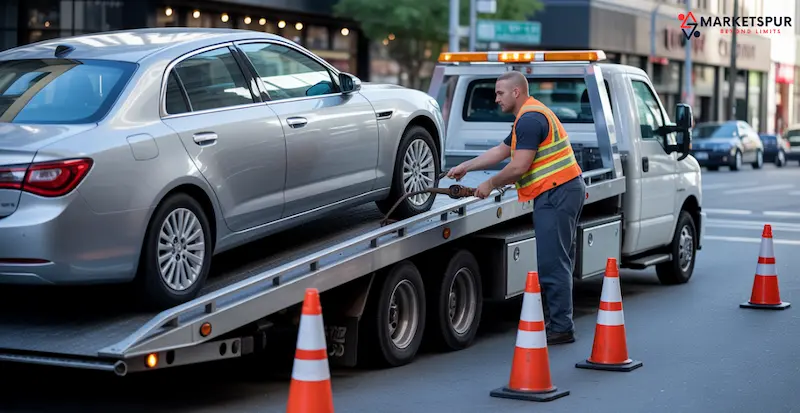
In these instances, professional recovery is the only safe option. They have the winches, flatbeds, and specific know how to extract a vehicle without causing secondary damage. If you are stuck in the Michigan area with a complex breakdown, you might need to look for a company that specializes in flatbed towing services in Ann Arbor to ensure your vehicle is lifted completely off the ground rather than dragged. Flatbed towing is generally the safest method for all wheel drive vehicles and cars with severe mechanical issues.
Conclusion
Moving a disabled vehicle requires a cool head and a clear plan. It is a physical task that demands respect for the weight of the machine you are manipulating.