

Key Takeaways
- Automating expense management reduces errors and saves time.
- Implementing clear policies and approval workflows enhances control.
- Leveraging AI and machine learning provides deeper insights into spending patterns.
- Mobile expense tools offer flexibility and real time tracking.
- Digital record keeping promotes sustainability and efficiency.
In today’s fast moving business world, optimizing the way you manage expense is essential for growth and sustainability. Outdated processes lead to unnecessary costs, administrative headaches, and missed opportunities to drive profits. Modernizing your expense management saves time, uncovers powerful insights, and supports better decision making across your organization.
Whether you’re running a small business or overseeing a large enterprise, how you handle expenses can make a significant impact on your bottom line. Forward thinking companies understand that a digital first, automated approach improves accuracy and efficiency. Increasingly, business leaders are seeking innovative solutions to improve their expense management processes while minimizing manual intervention.
Automation is the foundation, but it is only part of the equation. Real advancement comes from strong expense policies, intelligent integration of artificial intelligence, mobile friendly platforms and the embrace of sustainability through digital record keeping. Adopting these strategies helps businesses eliminate bottlenecks, boost productivity, and maintain apparent oversight.
Staying competitive in today’s market means always seeking out ways to improve core processes. Efficiently managing spending enables teams to act quickly, stay within budgets and turn insights into action.
Automate Your Expense Management Workflow
Manual processes such as receipt collection, data entry and reimbursement approvals routinely eat up valuable hours and are prone to mistakes. Adopting an automated workflow allows employees to submit expenses immediately, managers to review requests quickly and finance teams to close the books without delays. Thanks to features like optical character recognition (OCR) for scanning receipts, automation all but eliminates manual entry errors and lost paperwork.
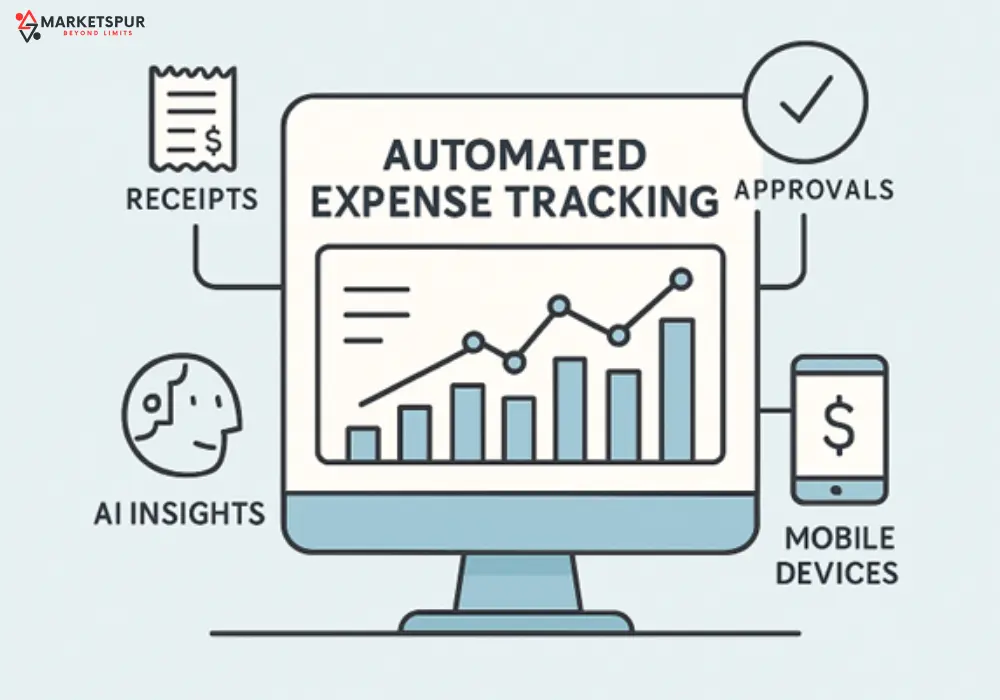
With automated expense management platforms, financial leaders gain complete visibility into current and projected spending. Live dashboards enable teams to monitor expenditures as they occur, making it easier to spot potential overruns before they become issues. Automating these processes reduces tedious back and forth, giving employees more time to focus on their core responsibilities. Automation also helps companies identify patterns in spend data, thereby improving forecasting and strategic planning. According to Inc., improved automation in financial processes can significantly reduce overhead costs and increase overall business agility.
Implement Clear Policies and Approval Workflows
Clear expense policies ensure that all employees know exactly what is expected of them, minimizing confusion and the risk of non compliance. When budget thresholds are explicitly defined, teams are empowered to make appropriate choices while staying within limits. Modern expense management tools provide built in checks that automatically validate submissions against predefined guidelines.
Multi level digital approval workflows ensure that requests are routed to the correct approvers without unnecessary delays. These systems log every step in the approval process, offering an accessible audit trail for both financial officers and auditors. By automating approvals, companies can enforce consistent control with minimal friction, supporting both operational speed and transparency. Findings from Harvard Business Review suggest that digital workflows enable organizations to react faster and make informed decisions, which is crucial in a competitive business environment.
Leverage AI and Machine Learning
Artificial intelligence and machine learning are transforming how organizations track and use spending data. Modern platforms use intelligent scanning to automatically categorize expenses, detect potential fraud, and flag inconsistencies in real time. These technologies learn from past data to improve classification accuracy, reducing the time spent on manual reviews and clarifications.
AI driven insights also enable organizations to discover trends and identify outliers quickly. For example, an AI solution might highlight unusually high travel expenses compared to previous months, prompting timely interventions. Harnessing these capabilities leads to better risk management, greater savings, and greater agility in adapting to changing market conditions.
Embrace Mobile Expense Tools
Mobile expense management applications have become essential for today’s distributed and fast moving teams. Employees can snap pictures of receipts, create and submit reports, and check approval statuses in real time from anywhere. This immediate access simplifies compliance, reduces lost receipts, and supports a more seamless employee experience.
Modern mobile tools also integrate with core business systems, syncing data instantly. Real time notifications alert users when actions are required, enabling timely approvals and swift reimbursement. By empowering employees to manage expenses on the go, businesses can minimize delays and maintain up to date financial records.
Adopt Digital Record Keeping
Switching to digital record keeping helps businesses significantly reduce their reliance on paper while making documentation easier to access and audit. Secure, cloud based solutions enable quick record retrieval and facilitate compliance with tax regulations and industry standards. Going digital supports sustainability goals by reducing waste and energy use across company operations.
Leveraging digital archives helps avoid pitfalls of traditional record storage, such as loss or damage. It also streamlines annual audits and end of year reporting, making it easier for finance teams to deliver up to date and compliant records quickly and accurately.
Enhance Decision Making with Real Time Data
Access to real time expense data allows financial managers and business owners to make informed decisions with confidence. Accurate, up to date information ensures that teams understand where funds are being spent and adjust budgets accordingly. Whether planning a new project or optimizing ongoing initiatives, these insights help businesses maximize resources.
Comprehensive and organized expense data is especially valuable during tax season. By categorizing expenses in real time, businesses reduce the risk of errors, streamline audits, and ensure every deductible expense is clearly documented.
Overcome Barriers to Automation
Many small business owners and entrepreneurs hesitate to invest in automation due to cost concerns or fear of a steep learning curve. The key to overcoming these hurdles is to start small, automate the most tedious or error prone tasks first, and actively involve employees in implementation. This incremental approach lessens disruption and builds confidence across your organization, paving the way for broader adoption.
Ongoing training and open communication also help overcome resistance to change. Demonstrating tangible benefits, such as faster reimbursements or less paperwork, can motivate teams to embrace new processes and ensure smooth transitions.
Conclusion
Modern strategies for expense management do more than keep your business up to date with technology. They unlock smarter, more efficient ways to allocate resources, protect company finances, and promote sustainable practices. By streamlining workflows, setting clear policies, adopting AI and mobile tools, maintaining digital records, and acting on real time data, your organization is positioned for lasting success and financial health.