
Introduction
Every classroom contains students with diverse learning needs, interests, readiness levels, and learning preferences. The traditional one size fits all approach to instruction fails to meet many students where they are, leaving some bored and others overwhelmed. Differentiated instruction offers a framework for tailoring teaching to accommodate this diversity, ensuring that all students can access content and demonstrate learning in ways that work for them. This approach requires teachers to be flexible, responsive, and creative in their instructional design. With the support of tech tools that enable personalized learning pathways, differentiation has become more manageable and effective than ever before.
Understanding the Foundations of Differentiation
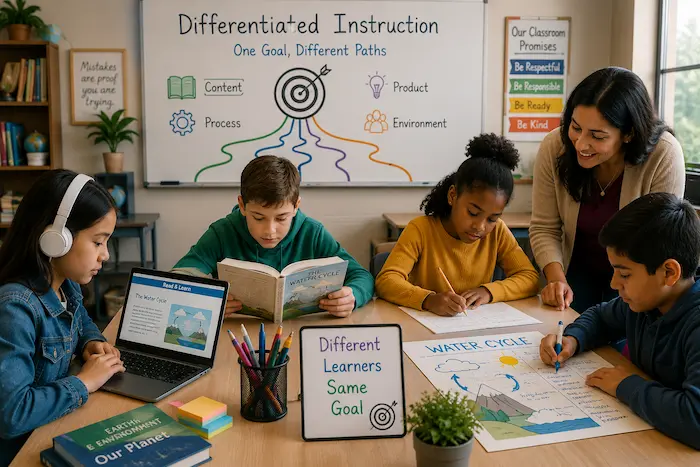
Differentiated instruction rests on several key principles that guide its implementation. First, it recognizes that students differ in their readiness to learn specific content, requiring varied levels of challenge and support. Second, it acknowledges that students have different interests that can be leveraged to increase engagement and motivation. Third, it respects that students have preferred learning modalities some learn best through visual information, others through hands on experiences, and still others through auditory input. Effective differentiation addresses these differences by varying content (what students learn), process (how they learn it), product (how they demonstrate learning), and learning environment (the context in which learning occurs). Rather than lowering expectations for struggling students, differentiation provides multiple pathways to rigorous learning goals.
Differentiating Content and Process
Content differentiation involves providing students with access to information at appropriate complexity levels while maintaining high expectations for all. This might include offering texts at different reading levels on the same topic, providing supplementary resources for students who need additional background knowledge, or offering extension materials for advanced learners. Teachers can use pre assessment data to group students flexibly based on their current understanding. Process differentiation focuses on how students make sense of content. Some students might benefit from graphic organizers to structure their thinking, while others work better with open ended exploration. Collaborative learning works well for some students, while others need independent work time. Varying the pacing of instruction ensures that students who grasp concepts quickly can move forward while those who need more time receive it without feeling rushed or stigmatized.
Creating Differentiated Products and Assessments
Allowing students to demonstrate their learning through varied products honors different strengths and interests while maintaining rigorous standards. Rather than requiring all students to complete identical assignments, teachers can offer choice menus that include options like written reports, multimedia presentations, artistic representations, dramatic performances, or hands on demonstrations. The key is ensuring that all options require students to engage deeply with content and meet the same learning objectives. Rubrics that focus on content understanding and skill development rather than format ensure consistent standards across different product types. Differentiated assessment also includes varied formative assessment strategies some students demonstrate understanding well through verbal explanation, while others show their thinking more clearly through written work or visual representations. By offering multiple ways to show learning, teachers gain a more accurate picture of what students truly understand.
Managing a Differentiated Classroom
One of the biggest challenges teachers face with differentiation is classroom management when students are working on different tasks simultaneously. Establishing clear routines and expectations is essential. Students need to understand how to access materials independently, what to do when they complete work, and how to seek help without disrupting others. Anchor activities meaningful tasks students can work on independently keep early finishers engaged while the teacher works with small groups. Flexible grouping strategies allow teachers to provide targeted instruction to students with similar needs while avoiding the stigma of permanent ability groups. Technology can support management by providing some students with self paced digital learning while the teacher works directly with others. Clear communication about learning goals helps students understand that different students may be taking different paths toward the same destination.
Using Data to Inform Differentiation
Effective differentiation depends on knowing students well their current understanding, their learning preferences, their interests, and their challenges. Pre assessments before beginning new units reveal what students already know and what misconceptions they hold. Ongoing formative assessments during instruction help teachers adjust their approach in real time. Student interest surveys and learning preference inventories provide information for planning engaging, accessible lessons. Analyzing assessment data helps teachers identify patterns perhaps several students struggle with the same concept and would benefit from small group reteaching, or maybe some students are ready for more complex applications. Documentation of differentiation strategies and their effectiveness helps teachers refine their practice over time. When differentiation decisions are grounded in data rather than assumptions, they’re more likely to meet students’ actual needs.
Conclusion
Differentiated instruction represents a commitment to educational equity ensuring that all students have access to challenging, engaging learning experiences tailored to their needs. While implementing differentiation requires significant planning and flexibility, the results justify the effort. Students who receive appropriately differentiated instruction are more engaged, experience greater success, and develop more positive attitudes toward learning. As classrooms become increasingly diverse, differentiation moves from optional enhancement to essential practice. Teachers who embrace differentiation recognize that fairness doesn’t mean treating all students identically, but rather giving each student what they need to succeed. By honoring students’ differences while maintaining high expectations, differentiated instruction helps all learners reach their potential.