
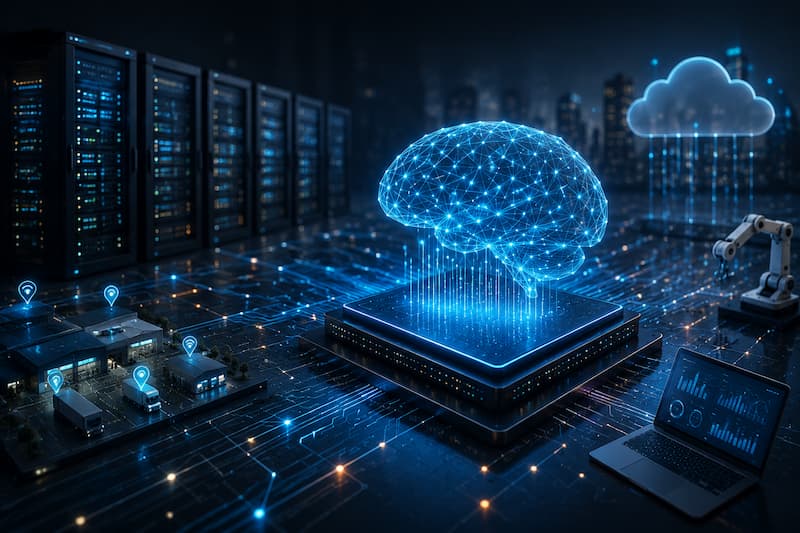
Artificial intelligence is changing the way businesses operate, compete, and make decisions. As AI becomes part of everyday operations, organizations need infrastructure that can support increasing data volumes, evolving technologies, and growing business demands. A flexible and scalable foundation allows companies to adopt new AI capabilities without constantly rebuilding their technology stack.
- Introduction
- Why Scalable AI Infrastructure Matters
- Integrating AI with Existing Enterprise Systems
- Using Edge Computing to Improve AI Performance
- Building Faster and More Reliable Networks
- Strengthening Data Quality and Governance
- Adopting Flexible Architectures and Responsible AI Management
- Conclusion
Introduction
Businesses today generate more data than ever before, and AI has become one of the most valuable tools for turning that information into meaningful insights. From automating routine tasks to improving customer experiences and supporting strategic decisions, AI is now influencing almost every industry. However, the success of any AI initiative depends on more than advanced algorithms. It requires an infrastructure that is reliable, adaptable, and built for long term growth.
Companies exploring effective AI transformation often look to enterprise AI solutions that deliver robust, scalable, and easily integrated frameworks.
Future proofing AI infrastructure means creating an environment that can evolve as technology changes. Instead of focusing only on current business needs, organizations should build systems that can support future workloads, integrate new technologies, and scale without causing major disruptions. A strong infrastructure enables faster innovation while helping businesses remain competitive in an increasingly digital marketplace.
Why Scalable AI Infrastructure Matters
AI applications require significant computing power, storage capacity, and high speed connectivity. As machine learning models become more advanced, the demand for processing resources continues to grow. Infrastructure that cannot expand alongside these workloads often leads to slower performance, higher costs, and limited business growth.
According to TechTarget, Scalable infrastructure gives organizations the flexibility to increase computing resources whenever demand rises. Whether workloads run on cloud platforms, private data centers, or hybrid environments, businesses can continue developing AI solutions without facing unnecessary technical limitations.
Integrating AI with Existing Enterprise Systems
Many organizations still rely on legacy applications that were never designed to support artificial intelligence. Integrating modern AI solutions into these environments can be challenging when data is scattered across multiple systems or outdated technology limits performance.
A successful integration strategy starts with improving data accessibility and modernizing core infrastructure where necessary. Connecting data sources, eliminating information silos, and ensuring compatibility between existing platforms and new AI technologies creates a smoother path for adoption. With a well planned approach, businesses can introduce AI without interrupting daily operations.
Using Edge Computing to Improve AI Performance
Edge computing has become an important part of modern AI infrastructure because it processes information closer to where it is created. Instead of sending every piece of data to a centralized cloud, devices can analyze information locally and respond almost immediately.Industry findings reported by TechRadar stress that outdated infrastructure, not the AI tools themselves, is the primary obstacle to progress.
This approach is especially valuable for industries where quick decisions are essential. Manufacturing facilities can detect production issues in real time, logistics companies can optimize deliveries instantly, and healthcare providers can process critical information without unnecessary delays. Reducing the amount of data transferred across networks also lowers bandwidth usage and improves overall efficiency.
Building Faster and More Reliable Networks
Network performance plays a major role in the success of AI systems. Large AI models constantly exchange information between servers, storage systems, and cloud environments. Slow or unreliable networks can create bottlenecks that reduce performance and increase processing time.
Modern networking technologies provide the speed and stability required for demanding AI workloads. High bandwidth connections and low latency communication allow data to move efficiently across distributed environments, helping organizations maximize the value of their computing resources while supporting future expansion. How AI Data Centers Are Shaping The Future Of Ethernet
Strengthening Data Quality and Governance
Even the most advanced AI models cannot produce reliable results without accurate data. Poor quality information often leads to incorrect predictions, inconsistent outcomes, and reduced confidence in AI driven decisions.
Organizations should establish clear data governance policies that define how information is collected, stored, protected, and maintained. Regular validation, monitoring, and security controls help preserve data accuracy while supporting compliance with privacy regulations. Strong governance creates a solid foundation for trustworthy AI systems.
Adopting Flexible Architectures and Responsible AI Management
Technology continues to evolve, making flexibility one of the most important characteristics of enterprise infrastructure. Modular architectures allow businesses to expand or modify individual components without redesigning entire systems. This approach supports hybrid deployments, cloud adoption, and changing operational requirements while reducing long term costs.
Managing AI responsibly is equally important. Machine learning models should be monitored regularly to ensure they continue producing accurate results as business conditions change. Organizations also need clear processes for updating models, controlling access, protecting sensitive information, and responding to security incidents. Continuous monitoring helps maintain performance while reducing operational risks.
People are just as important as technology. Teams responsible for infrastructure, data, and AI development should work together under consistent standards and clearly defined objectives. Ongoing training and collaboration ensure that investments in AI deliver meaningful business value over time.
Conclusion
Future proofing AI infrastructure is not simply about purchasing faster hardware or adopting the latest software. It requires thoughtful planning, scalable architecture, reliable networking, strong data governance, and continuous improvement. Organizations that invest in flexible and well managed infrastructure are better prepared to adapt to changing technologies and growing business demands. By building a solid foundation today, enterprises can confidently expand their AI capabilities and create lasting value in the years ahead.