Manufacturing relies on precision, whether producing steel beams or textiles. Industrial cutting and slitting technologies play a key role in efficiently transforming raw materials into usable components. Choosing the right method such as high powered lasers or mechanical shearing can streamline production and reduce waste.
The Titans of Industrial Cutting
When we talk about “cutting” in an industrial context, we usually refer to severing thicker or harder materials, often involving thermal or high pressure processes. Here are three of the most dominant methods.
Laser Cutting
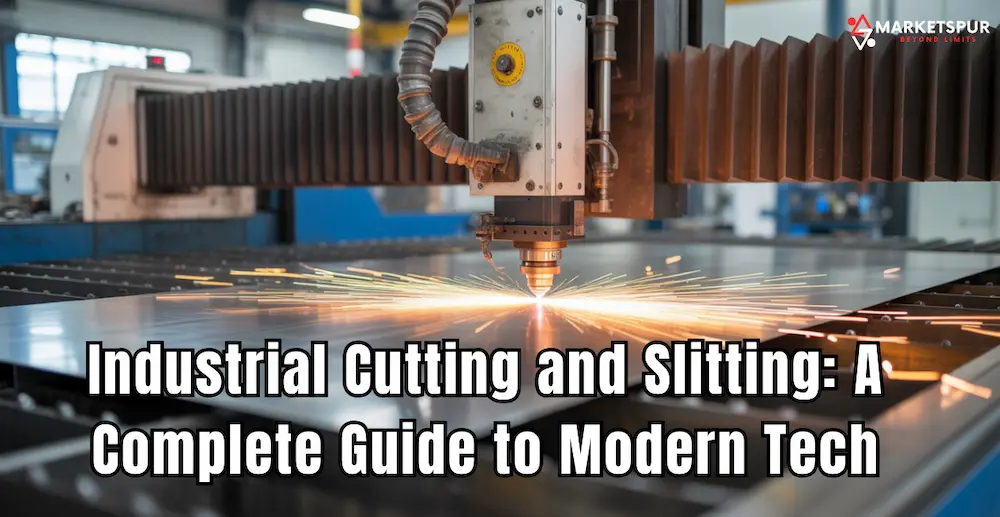
Laser cutting uses a high powered laser beam to melt, burn, or vaporize material. It is a non contact process, meaning the tool doesn’t physically touch the material, which reduces wear and contamination.
How it works: A focused beam of light is directed at the material. Gas (like oxygen or nitrogen) is often used to blow away the molten material.
Best for: Precision is the main advantage here. Lasers are incredible for complex geometries and fine details in metals, plastics, and even wood. They offer a clean edge finish that often requires no secondary processing.
Waterjet Cutting
Waterjet cutting feels almost contradictory using water to cut through steel sounds impossible, but physics begs to differ. By pressurizing water to extreme levels (up to 90,000 PSI) and mixing it with an abrasive substance like garnet, waterjets can slice through almost anything.
How it works: A high pressure pump forces water through a tiny nozzle. For soft materials like rubber or foam, pure water is used. For hard metals or stone, abrasive particles are added to the stream.
Best for: Materials that are sensitive to heat. Since waterjet cutting is a cold process, there is no “heat-affected zone” (HAZ), preventing warping or changing the material’s properties. It is ideal for thick metals, stone, and composites.
Plasma Cutting
Plasma cutting is the heavy hitter for electrically conductive materials. It is faster than laser or waterjet for cutting medium thickness steel plates.
How it works: An accelerated jet of hot plasma is directed at the workpiece. The electrical arc melts the metal, and the high velocity gas blows the molten metal away.
Best for: Speed and cost effectiveness on conductive metals like steel, stainless steel, and aluminum. It is less precise than laser cutting but significantly faster and cheaper for heavy fabrication tasks.
Slitting Technologies: Precision for Rolls and Webs
While cutting handles sheets and plates, “slitting” is typically associated with converting large rolls of material (webs) into narrower rolls. This is standard in industries handling paper, film, foil, and textiles.
Rotary Shear Slitting
This method works like a continuous pair of scissors. Two circular blades one top and one bottom come together to shear the material.
Pros: Extremely precise and produces clean edges. It is robust enough for heavier gauges of foil and paper.
Cons: Setup can be time consuming, as the blades must be perfectly aligned.
Razor Slitting
The simplest and most cost effective method. A stationary razor blade is positioned in the air or a grooved roll, and the material is pulled through it.
Pros: Very cheap and easy to set up.
Cons: The blades wear out quickly and produce heat due to friction. It is primarily suitable for thin films and plastics, as it can tear or stretch heavier materials.
Score (Crush) Slitting
In this method, a dull, circular knife is pressed against a hardened anvil roll. The pressure “crushes” the material to separate it.
Pros: Easy to adjust and great for materials with varying thicknesses.
Cons: The edge quality is generally lower than shear slitting, and it can cause dust generation with paper products.
Choosing the Right Method for Your Operations
Selecting the correct technology isn’t just about what can cut the material; it’s about what makes the most economic and operational sense. Here are the critical factors to weigh.
Material Properties
This is your starting point. Is the material conductive? If yes, plasma is an option. Is it heat sensitive? Waterjet or mechanical slitting is safer. Hardness, thickness, and melting point all dictate which technologies are viable.
Precision vs. Speed
There is often a trade off. Laser cutting offers extreme precision but can be slower on thick materials compared to plasma. Razor slitting is fast for films but lacks the clean edge of rotary shear slitting. You must define what tolerance your final product requires.
Operational Cost
Initial machine costs are one thing; running costs are another. Lasers consume significant power. Waterjets require abrasive consumables and frequent maintenance on pumps. Mechanical slitting requires regular blade sharpening or replacement. You might need to consult a specialized shear blades manufacturer to estimate the long term costs of consumables for rotary systems.
Production Volume
High volume environments often benefit from automated systems with fast processing speeds, even if the initial investment is higher. Lower volume, custom job shops might prioritize versatility over raw speed.
Applications Across Industries
These technologies power diverse sectors, often in ways consumers never see.
- Automotive: Laser cutting is extensively used for car body panels, while waterjets cut intricate dashboard components and carpets.
- Textiles: Razor and shear slitting are vital for converting huge rolls of fabric into usable widths for clothing manufacturing.
- Packaging: Score slitting is the backbone of the tape and label industry, turning massive master rolls into the small rolls you buy at the store.
- Aerospace: The need for precision and no heat damage makes waterjet cutting a favorite for titanium and carbon fiber components used in aircraft bodies.
Future Trends: Smarter, Faster, cleaner
The field is not static. Innovation is driving efficiency and sustainability.
Automation and AI Integration: Machines are becoming smarter. Modern cutting systems can self diagnose maintenance needs and optimize nesting (the layout of parts on a sheet) to minimize waste, driven by AI algorithms.
Hybrid Machines: We are seeing the rise of machines that combine technologies—such as a plasma cutter with a drilling head to perform multiple operations without moving the workpiece.
Sustainability: There is a growing push for “green” cutting. This includes electric press brakes that consume less energy and waterjet recycling systems that clean and reuse water and abrasive materials, significantly reducing the environmental footprint of the shop floor.
Conclusion
Industrial cutting and slitting technologies are the bridge between raw potential and finished product. Whether you are slicing through inches of steel or converting delicate films, the technology you choose defines your efficiency and quality.