
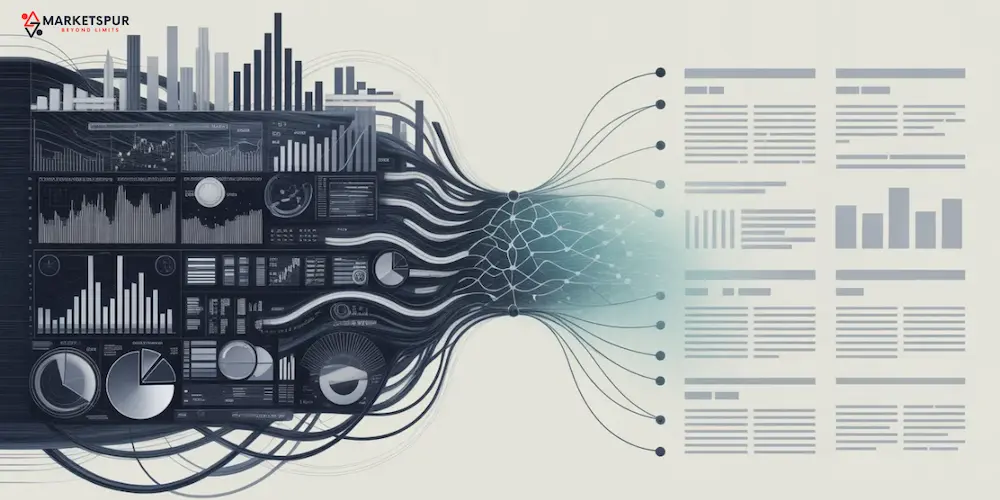
Analytics complexity does not arrive all at once. It accumulates gradually as new data sources are added, metrics evolve, and reporting requirements expand. Over time, dashboards become dense, logic becomes layered, and understanding slows. Teams can see what changed, but explaining why it changed becomes increasingly difficult.
- Complexity Grows Faster Than Understanding
- Layered Logic Obscures Meaning
- GPT Translates Complexity Into Explanation
- Pattern Recognition Improves Insight
- Clarity Reduces Misinterpretation
- Stakeholders Need Clarity, Not Detail
- Analysts Gain Back Time
- Scaling Complexity Without Losing Insight
- Embedded Clarity Improves Adoption
- Clarity Changes How Analytics Is Used
- When Complexity Becomes A Barrier
- Clarity As A Competitive Advantage
- Why GPT Matters In Complex Analytics
At this stage, adding more charts rarely helps. This is where many teams turn to GPT-powered analytics clarity to make complex analytics understandable without stripping away necessary detail.
Complexity Grows Faster Than Understanding
Modern analytics systems scale data volume efficiently, but human understanding does not scale at the same rate. As dashboards combine more sources and calculated fields, interpreting results requires deeper mental effort. What once took minutes now takes hours of investigation.
Analysts trace logic paths, compare periods, and cross check metrics before reaching conclusions. Complexity becomes the bottleneck, not data availability.
Visibility Is Not Clarity
Seeing more data does not guarantee clearer insight. Without explanation, additional metrics often obscure rather than illuminate what matters.
Layered Logic Obscures Meaning
Complex analytics relies on layered transformations. Metrics are built on top of other metrics, filtered through conditions, and blended across platforms. These layers make results harder to explain.
When a number shifts, teams must mentally reconstruct the logic stack to understand the impact. This reconstruction is slow and error-prone, especially under time pressure. GPT helps surface meaning without requiring users to unpack every layer manually.
GPT Translates Complexity Into Explanation
GPT adds clarity by translating complex analytical behavior into understandable explanations. Rather than simplifying data, GPT explains it. It describes how related metrics interact, why changes occurred, and whether behavior aligns with historical patterns. This translation preserves analytical depth while reducing cognitive load.
From Dense Metrics To Clear Narratives
GPT reframes complex outputs into narratives that reflect how people think about performance. Understanding improves without sacrificing precision.
Pattern Recognition Improves Insight
Complex analytics often hides patterns in plain sight. Small shifts across multiple metrics may indicate meaningful change, but visual detection is difficult. GPT identifies these relationships and highlights patterns that deserve attention.
It brings coherence to complexity by showing how pieces fit together. This pattern recognition reduces the chance that important signals are overlooked.
Clarity Reduces Misinterpretation
When analytics is complex, misinterpretation becomes common. Teams draw conclusions based on partial understanding or isolated metrics. GPT reduces this risk by providing context aware explanations.
It helps users interpret changes correctly by considering multiple factors simultaneously. Better clarity leads to better judgment, even in complex environments.
Stakeholders Need Clarity, Not Detail
Business stakeholders do not need every analytical detail. They need clarity about implications. GPT bridges this gap by summarizing complex behavior in accessible language.
It allows stakeholders to understand outcomes without navigating analytical complexity themselves. This improves engagement and reduces dependency on analysts for explanation.
Analysts Gain Back Time
Analysts spend significant time explaining complex dashboards. As complexity grows, explanation effort increases disproportionately. By handling first pass clarification, GPT reduces repetitive explanation work.
Analysts can focus on deeper analysis, strategy, and optimization rather than constant interpretation. Clarity automation improves both efficiency and analytical depth.
Scaling Complexity Without Losing Insight
As organizations scale analytics, complexity is unavoidable. More data sources and use cases naturally increase analytical depth. The challenge is maintaining clarity as complexity grows. GPT enables teams to scale analytics without losing insight by making complexity navigable rather than overwhelming. This capability is critical for mature analytics environments.
Embedded Clarity Improves Adoption
Clarity is most effective when it is embedded directly into analytics workflows. When explanations appear alongside dashboards, users do not need to ask follow-up questions or seek external documentation.
Understanding becomes immediate. This approach aligns with platforms built as a Dataslayer analytics clarity layer, where explanation and analysis are designed to work together.
Clarity Changes How Analytics Is Used
When analytics becomes clearer, behavior changes. Teams rely on reports more confidently and act faster. Meetings shift from interpreting numbers to discussing actions.
Analytics becomes a decision enabler rather than a discussion point. Clarity increases the practical impact of analytics without adding complexity.
When Complexity Becomes A Barrier
Complexity becomes a problem when it blocks understanding rather than enabling deeper insight. At that point, teams must decide whether to simplify analytics or improve interpretation.
GPT allows teams to do the latter. It preserves analytical richness while restoring clarity.
Clarity As A Competitive Advantage
Organizations that can interpret complex analytics effectively make better decisions faster. GPT provides this advantage by turning complexity into clarity at scale. It ensures that insight keeps pace with analytical sophistication.
Why GPT Matters In Complex Analytics
GPT adds clarity where traditional analytics tools stop at visualization. By explaining relationships, patterns, and implications, GPT makes complex analytics usable rather than intimidating.
That is why GPT becomes most valuable when analytics complexity increases. It does not remove complexity. It makes it understandable, actionable, and trustworthy.