
Key Takeaways:
- SASE integrates networking and security into a unified, cloud-delivered service.
- It enhances security for remote workforces and cloud-based applications.
- Adoption of SASE is driven by the need for scalable and flexible network security solutions.
The rapid expansion of cloud services and the proliferation of remote and hybrid work models have fundamentally changed how organizations operate and protect their data. As traditional security perimeters dissolve and users access sensitive information from diverse locations, the need for modern, adaptable security solutions has never been greater. For decision-makers and IT leaders looking to adapt, understanding SASE can provide a clear path forward.
Secure Access Service Edge, or SASE, represents a major departure from legacy solutions by consolidating networking and security into one unified, cloud-delivered model. With threats on the rise and environments becoming more distributed, organizations are increasingly drawn to cloud-native approaches that are built to support modern business challenges. SASE offers holistic protection, seamless connectivity, and policy consistency for all users, no matter their location, redefining how enterprises approach secure network access.
This evolution is not simply a technical adjustment. It’s a strategic shift in how security and networking teams think about access, risk, and operational efficiency. Adopting SASE means organizations can support innovation, remote work, and digital transformation without compromising security. Industry leaders are implementing SASE solutions to ensure their technology investments keep pace with the demands of the modern digital landscape.
Businesses embracing SASE typically see improvements not just in security posture but also in agility and operational cost savings.
Understanding SASE
SASE merges wide-area networking (WAN) features with a suite of integrated security capabilities, including secure web gateway, firewall-as-a-service, and zero-trust network access. The real power of SASE lies in its ability to deliver these capabilities as a service through the cloud. Instead of relying on a traditional hardware-based perimeter, SASE focuses on delivering security and connectivity closest to the user, regardless of where they physically connect from.
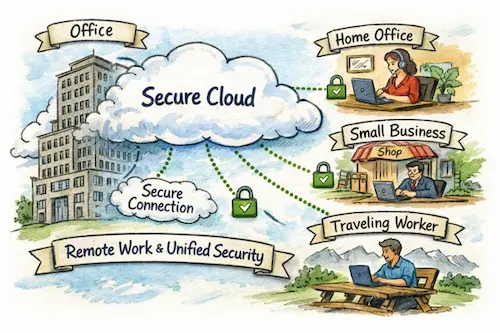
Because SASE is delivered as a cloud service, organizations no longer have to backhaul remote traffic to central data centers for inspection and filtering. All users, whether on a local network or working remotely, benefit from uniform policy enforcement and advanced security controls. This shift significantly reduces complexity and supports a seamless digital experience for employees and customers alike.
Benefits of SASE
- Enhanced Security: SASE delivers robust and consistent protection against advanced cyber threats through consolidated services such as threat intelligence, data loss prevention, and secure access controls.
- Improved Performance: Direct-to-cloud access for SaaS and internal applications reduces latency, creating a faster, more reliable user experience and minimizing productivity barriers.
- Scalability: SASE empowers businesses to scale resources on demand. The cloud-delivered nature means organizations can quickly accommodate business growth, new locations, or seasonal spikes in usage with minimal effort.
- Cost Efficiency: By unifying networking and security capabilities, SASE reduces the need for multiple physical appliances and overlapping licenses, leading to operational and capital expense savings.
Additionally, SASE offers simplified IT management through centralized dashboards and automated policy enforcement, reducing the risk of misconfigurations and streamlining workflows for security teams.
SASE and Remote Work
Remote and hybrid work models have placed unprecedented demands on IT infrastructure and security. Traditional security methods, which depend on fixed perimeters and centralized access points, are proving inadequate for securing distributed workforces that access resources from home, co-working spaces, and branch offices. SASE allows organizations to secure all endpoints while delivering consistent access controls, regardless of where their users connect from.
By offering identity-driven security frameworks and zero-trust principles, SASE ensures that every access request is verified and every connection monitored. This approach gives businesses confidence to support flexible work arrangements without increasing risk, a concern echoed in research published by Forbes Tech Council.
Implementing SASE
- Assess Current Infrastructure: Begin by auditing existing networking and security systems. Identifying gaps and pain points allows for more targeted SASE adoption.
- Define Security Policies: Establish clear usage, access, and security policies. Ensure these policies reflect business risk and compliance requirements, and can be uniformly enforced with SASE.
- Select a SASE Provider: Evaluate prospective vendors for comprehensive feature sets, integration capabilities, and industry reputation. Consider future scalability and vendor support.
- Plan Deployment: Roll out SASE solutions in phases, starting with critical locations or user groups. This approach minimizes disruptions and enables learning from early stages to inform broader deployments.
- Monitor and Optimize: Continuously track usage patterns, security incidents, and network performance. Ongoing tuning ensures the SASE environment evolves with the business and cybersecurity landscape.
Challenges in SASE Adoption
- Integration Complexity: Existing investments in security and networking hardware may require careful planning to integrate with cloud-delivered SASE services.
- Skill Gaps: The convergence of networking and security demands new knowledge from IT teams. Upskilling and cross-training are essential for operational success.
- Vendor Selection: Not all SASE solutions are created equal. Choosing a provider with a proven track record and comprehensive support capabilities is critical to realizing the full benefits of SASE adoption.
Careful strategy, transparent communication, and ongoing education can help minimize disruptions during transition periods and maximize the effectiveness of new solutions.
Future Trends in SASE
- AI Integration: Artificial intelligence and machine learning are being added to SASE solutions to help automate threat detection, policy enforcement, and incident response. These enhancements lead to faster identification and mitigation of sophisticated attacks.
- Zero Trust Architecture: The evolution of zero trust continues to shape SASE solutions, with increasing verification standards for every request and user, regardless of their network origin.
- Edge Computing: As organizations deploy more IoT devices and leverage edge computing, SASE platforms will expand to offer secure, low-latency connectivity and protection for distributed edge environments.
As these trends accelerate, organizations investing in SASE are better positioned to meet the demands of digital transformation, remote work, and the ever-evolving threat landscape.
Conclusion
SASE is fundamentally changing how organizations think about network security. By converging networking and security capabilities into a single, scalable, and cloud-delivered framework, SASE provides the adaptability and resilience that modern enterprises require. As more organizations recognize the necessity of supporting flexible work and safeguarding digital assets, SASE adoption is set to grow, solidifying its role as a cornerstone of the secure, cloud-first future.