
Digital transformation is now a necessity for companies aiming to stay competitive in today’s fast-moving business environment. One of the most impactful changes is the move from manual, paper-based payroll processes to modern digital systems. As businesses evolve, solutions like Instant Financial are helping reshape payroll by improving efficiency, transparency, and security for both employers and employees.
- Enhancing Efficiency Through Automation
- Ensuring Accuracy and Compliance
- Improving Employee Experience
- Leveraging AI for Strategic Insights
- Adapting to Remote and Hybrid Workforces
- Real-Time Payments and Employee Financial Well-being
- Data Security and Privacy in Digital Payroll
- Future Trends in Payroll Digitization
Digitizing payroll is no longer just about convenience. It has become a strategic move that directly affects compliance, operational costs, employee satisfaction, and workforce flexibility. Organizations that adopt digital payroll systems gain a clear advantage by handling sensitive data more securely, reducing errors, and keeping employees engaged in a changing work environment.
Enhancing Efficiency Through Automation
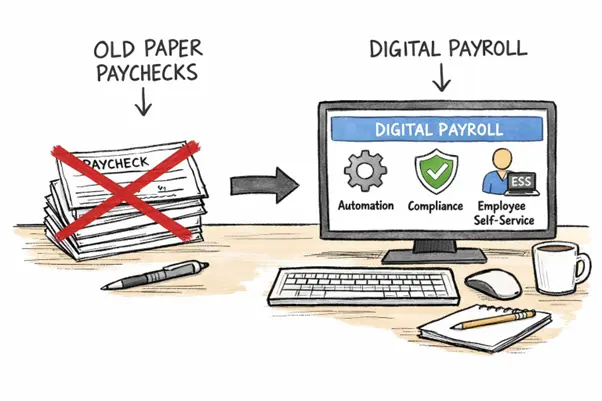
Modern payroll systems rely heavily on automation. Tasks like tracking work hours, calculating taxes, and processing payments can now be handled with minimal manual effort. This allows HR and finance teams to focus on more meaningful and strategic responsibilities. Many organizations automate a large portion of their payroll operations, helping reduce administrative costs and speed up payroll cycles.
The use of AI-driven tools and workflow automation also improves consistency while lowering the chances of human error, resulting in more reliable outcomes.
Ensuring Accuracy and Compliance
Payroll mistakes and compliance issues can lead to penalties and harm a company’s reputation. Digital payroll platforms simplify this by staying updated with changing tax laws, wage regulations, and reporting requirements automatically.
Built-in record-keeping and system alerts ensure that payroll calculations remain accurate across different roles and locations, reducing the risk of costly errors. Research from Deloitte indicates that automation can significantly cut payroll mistakes, highlighting the importance of investing in reliable payroll systems. In regulated industries, these tools also provide clear audit trails and dependable documentation.
Improving Employee Experience
Today’s employees expect quick and easy access to their information. Digital payroll solutions make this possible through self-service portals where employees can view pay slips, tax documents, and benefits anytime. This reduces dependency on HR teams and builds transparency.
Additionally, AI-powered support tools can quickly handle payroll-related questions, saving time and reducing frustration. Easy access to payroll details also encourages employees to stay informed about their earnings, which can positively impact engagement and retention.
Leveraging AI for Strategic Insights
Artificial intelligence is already playing a key role in payroll management. By analyzing workforce data, AI tools can highlight patterns in overtime, attendance, and benefits usage. These insights help businesses make smarter decisions about staffing, cost control, and future planning.
Payroll data is no longer just operational—it has become a valuable resource for understanding employee performance and overall business efficiency. AI can also detect unusual patterns in payroll data, helping prevent fraud and improve internal processes.
Adapting to Remote and Hybrid Workforces
The rise of remote and hybrid work has made payroll flexibility more important than ever. Digital payroll systems can easily handle different roles, working hours, and employee locations, making it easier to manage distributed teams.
These systems also help ensure compliance with varying regional laws and regulations, which is essential for companies hiring across different locations. As businesses expand their talent search globally, digital payroll simplifies onboarding, contract management, and payments, ensuring smooth operations.
Real-Time Payments and Employee Financial Well-being
Real time payment options are changing how employees access their earnings. With instant pay solutions, workers can receive their wages as they earn them, giving them better financial control. This is especially valuable for gig and hourly workers who often need quicker access to funds.
Growing demand for faster payments shows that many workers are even willing to pay a small fee for this convenience. These solutions play an important role in improving financial stability, which can lead to higher productivity, better engagement, and stronger employee loyalty.
Data Security and Privacy in Digital Payroll
Protecting payroll data is critical in any digital system. Reliable payroll solutions use strong encryption, strict access controls, and regular security checks to protect sensitive information from potential threats.
Beyond meeting compliance requirements, strong security practices help build employee trust and protect the company’s reputation. As cyber threats continue to increase, businesses must stay proactive and keep their systems updated to ensure data safety.
Future Trends in Payroll Digitization
Payroll digitization will continue to evolve alongside technologies like artificial intelligence, blockchain, and cloud computing. These advancements will further improve the speed, accuracy, and security of payroll processes while allowing better integration with other business systems.
Companies that stay updated with these innovations will be better prepared to adapt to changing regulations, market conditions, and workforce expectations.
Adopting digital payroll solutions is a powerful step for businesses looking to improve efficiency, maintain compliance, and enhance employee experience. As more organizations embrace these systems, they are seeing clear benefits and stronger positioning in a competitive market. Businesses that continue to adapt and innovate will be better equipped to handle future challenges and achieve long-term success.